
Sitting for eight hours a day and then going for a run doesn’t solve everything. Physical activity and sedentary behavior are two distinct things: even someone who exercises regularly can spend too much of the rest of the day sitting still. Being more active every day starts with breaking up long periods of sitting, before even thinking about sports or motivation.
Moving more at a desk job: the real first obstacle to daily exercise
We often assume the main barrier is laziness. In practice, the workday presents a more concrete problem: we sit for hours without a break, and the body stiffens long before our willpower gives out.
Santé.fr recommends getting up and walking for a few minutes at least once an hour. There’s no need for a structured workout: refilling your water bottle, taking a call while standing or walking up one flight of stairs is enough to get your circulation going and reduce the effects of staying in one position.
In an open-plan office, you can set a discreet reminder on your phone. When working from home, it’s even easier: no one’s watching if you do three squats between meetings. The goal isn’t to break a sweat, but to break up sitting time into shorter stretches.
If you’re looking for practical ideas for activities that fit your routine, the Soyez Sport website offers resources organized by type of activity.
Physical activity without a gym: what really matters
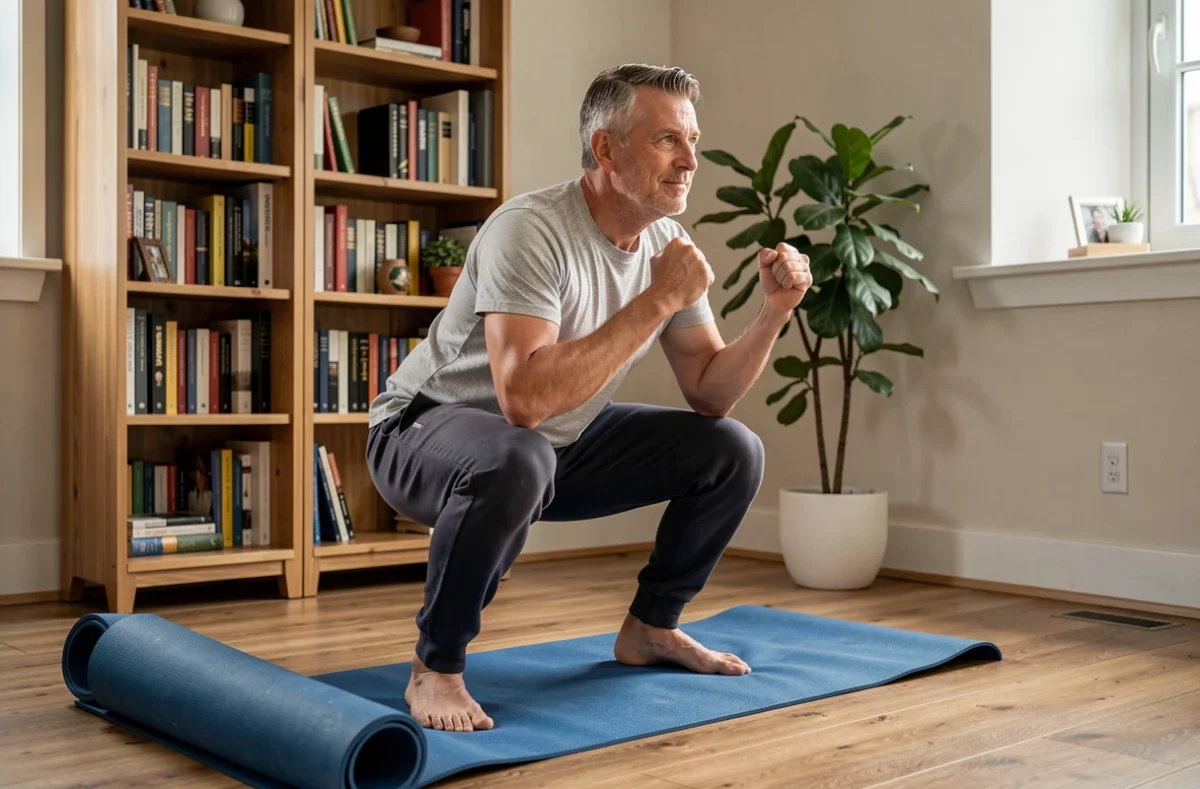
Official guidelines distinguish physical activity from “sport” in the traditional sense. Walking, cycling to work, taking the stairs or dancing in your living room all count as physical activity. You don’t need a gym membership or any special equipment.
This perspective can make a difference for people who don’t identify with the image of an athlete. If you live far from a gym, are on a tight budget or simply hate competition, active travel and everyday activities already count as physical activity.
Three practical ways to get moving without equipment
- Commuting: replace one metro or bus stop with a brisk walk to easily add several minutes of activity to your day without changing your schedule
- Shopping and household chores: carry your bags home, vacuum or garden—these activities engage your body enough to break up sedentary time
- Active family breaks: take a walk after dinner, play ball in the park or stretch for ten minutes in front of the TV—every bit adds up over the week
The trap is to dismiss these activities as insignificant because they don’t look like a workout. Consistency matters more than occasional bursts of intensity.
Getting active again with health concerns: when tailored support makes a difference
Returning to physical activity after a long break or while living with a chronic condition isn’t simply a matter of “taking it easy.” The decree of March 30, 2023 changed the rules for prescribing and providing adapted physical activity, clarifying which professionals are qualified and how the programs are delivered.
In practice, Maisons Sport-Santé support people who want to start or resume physical activity for their health or well-being, with or without a prescription. They offer an assessment, personalized advice and referrals to supervised sessions led by trained professionals.
There’s a real difference between a generic program found online and support tailored to someone’s health, particularly for people with joint pain, cardiovascular conditions or diabetes. Results vary considerably depending on the condition and the person’s initial level of deconditioning, making individualized follow-up more appropriate than a standard plan.

Daily exercise motivation: build a routine that lasts
Motivation fluctuates—that’s normal. What keeps you active over time isn’t Monday morning enthusiasm; it’s how easy the activity is to do. The simpler it is to get started, the less it depends on your mood that day.
Build the habit around an existing cue
Linking an activity to an established part of your day works better than leaving it to an open-ended time slot. Go for a walk right after lunch, stretch while the coffee brews or do five minutes of planks before your shower: a fixed cue takes the place of making a decision every day.
This helps you avoid the “I’ll do it when I have time” trap, which can put off activity indefinitely.
Track your progress without putting pressure on yourself
Tracking consistency (the number of active days per week) rather than performance (distance, weight lifted) can help you stay on a realistic path. A goal like “be active at least four days this week” is easier to stick to than a rigid plan requiring three 45-minute workouts.
- Marking your active days on a paper calendar or in a simple app creates a visible streak you’ll want to keep going
- Varying your activities from day to day (walking, cycling, stretching, dancing) helps prevent boredom without requiring complex planning
- Exercising with a partner or in a small group makes it a social activity, strengthening your commitment over several weeks
A modest, sustainable routine is better than an ambitious program abandoned after ten days. Your body adapts gradually, and the benefits for sleep, mood and energy often appear before visible physical changes.
Ultimately, getting more active doesn’t require a major feat or a complete overhaul. Break up sitting time, make the most of your daily journeys and choose a pace you can sustain: these three steps are enough to turn a sedentary day into an active one, without an elaborate program.