
In cooking, precision is often the secret ingredient of a successful recipe. Measurements must be exact, and for that, you need to understand volume conversions well, particularly the transition from milliliters to liters. This skill proves essential when following instructions that do not match the measuring utensils at hand. Whether it’s to adjust the proportions of a sauce, dilute a marinade, or measure the amount of liquid for a dough, knowing how to convert these units quickly and accurately can make all the difference in the success of a dish.
The Basics of Volume Conversion in Cooking
Measurement units in cooking, such as liquid measurements, dry measurements, and weight measurements, structure the culinary art with scientific rigor. Liquid measurements, in particular, are those frequently used for ingredients such as water, milk, wine, or oils: they include tablespoons, teaspoons, and cups. For dry ingredients, specific cups are recommended to maintain consistency in proportions.
Consider that precision is a requirement of any respectable recipe. For weight measurements, using a reliable kitchen scale becomes a significant ally. This precision in measurements ensures consistency in culinary results and, by extension, the quality of the dishes. You must master the equivalents, such as converting 350 ml to liters, which is 0.35 liters, to adjust quantities accurately.
The need for accurate conversions is undeniable in recipe adaptation and portion adjustment. Whether it’s to reduce a broth or increase the amount of a soup without altering its flavor, unit conversion in cooking is a fundamental skill. Professionals rely on conversion charts or dedicated apps to switch from one unit to another, thus ensuring a faithful transmission of the flavors and textures desired by the recipe creator.
Techniques and Tips for Mastering Conversions from Milliliters to Liters
Conversions from milliliters to liters in cooking resemble a precise art, requiring mastery and a deep understanding of the different measurement units. The conversion chart stands as an indispensable tool, allowing cooks to navigate easily between volumes and adapt their recipes to the constraints of portions or available ingredients. You should display it in a workspace for quick reference to equivalents, such as the 1000 milliliters that make up a liter.
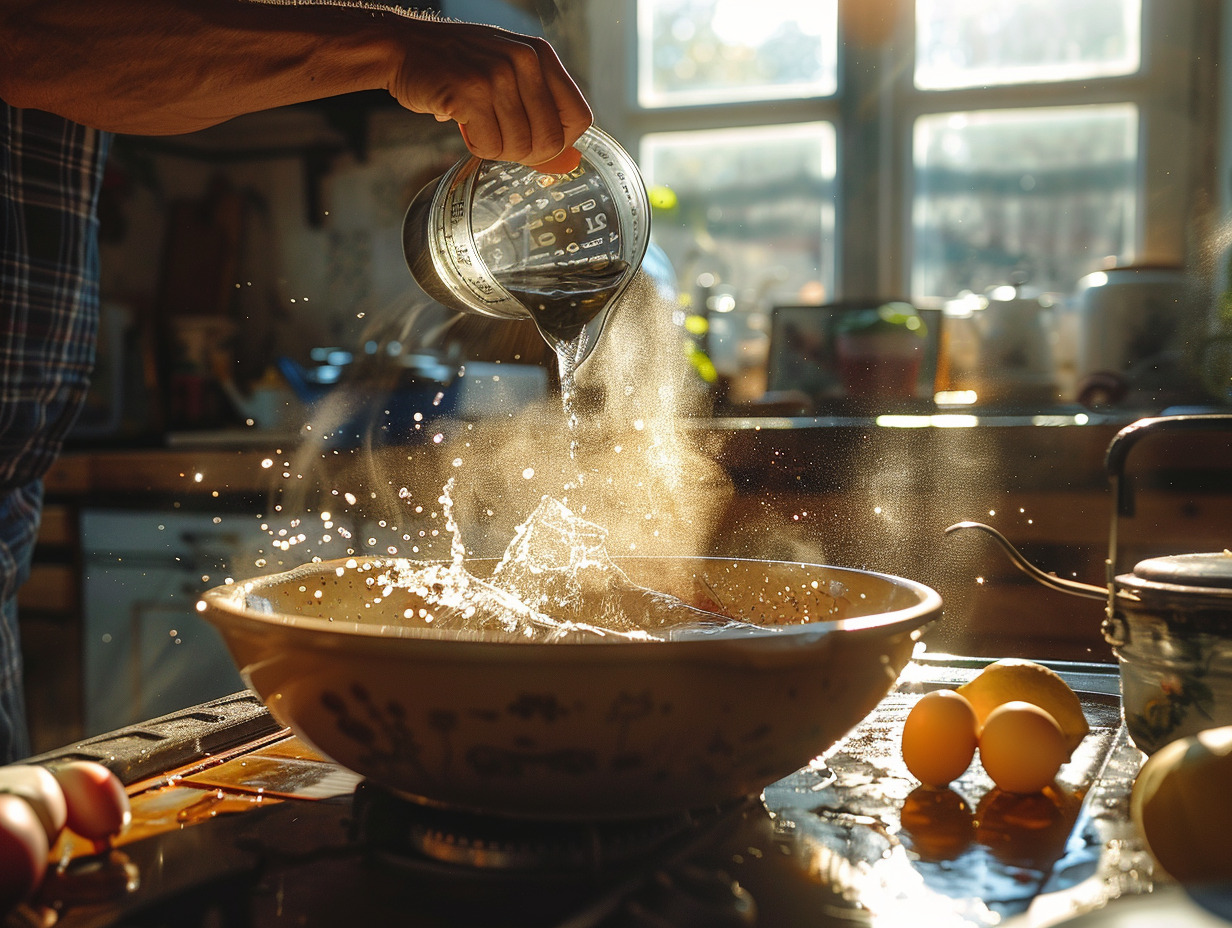
For flawless conversion, measuring tools such as kitchen scales, measuring cups, and graduated spoons are essential. They provide a precision that directly influences the quality of dishes. The correct gesture, careful reading, and careful handling of these instruments are skills to cultivate. Adhering to the proportions defined by the recipe ensures consistency in culinary results, a foundation for innovation and creativity in the kitchen.
Experience and intuition play a crucial role in the conversion process. Over time, chefs accustomed to commonly used quantities can adjust recipes without strictly relying on measurements. This flexibility in cooking allows for portion adjustments and ingredient substitutions while maintaining the integrity of the dish. However, for beginners or in the context of precision cooking, sticking to the prescribed measurements is the way to go.