
In the world of sports, units of measurement are essential for quantifying performances, comparing results, and tracking progress. Whether it is distance in athletics, weight in weightlifting, or time in swimming, athletes and coaches rely on a variety of metric and imperial units. Their conversion allows for a universal understanding of records and standards, thus facilitating the internationalization of competitions. This exchange between measurement systems is even more fundamental during global events, where personal bests must be accessible and understandable to all, regardless of the system typically used.
Measurement Units in the World of Sports
Measurement units form the foundation for accurately assessing sports performances. In athletics, swimming, or rowing, the International System of Units, with the meter as the standard of length, dominates competitions. This choice ensures uniformity of measurements for sports practiced on a global scale, where clarity of performances is crucial.
In disciplines such as American football, the yard, a unit of length from the imperial system, is traditionally used. This unit, precisely equivalent to 0.9144 meters, marks the lines of the playing field. The conversion of yards to meters is therefore essential for communicating the distances covered by players in terms understandable to an international audience.
The metric system, however, is not universal. The yard continues to prevail in certain Anglo-Saxon nations, where it measures both dives and throws. In these contexts, unit conversion is a daily exercise for athletes, coaches, and commentators to maintain consistency with international standards.
Most countries have adopted the International System of Units for international competitions, thus establishing a common language for global sports. The meter, as a universal unit of length, plays a central role in Olympic events, world championships, and other major gatherings. Performances are then recorded and communicated in this system, even though locally, other units such as the yard are still in use.
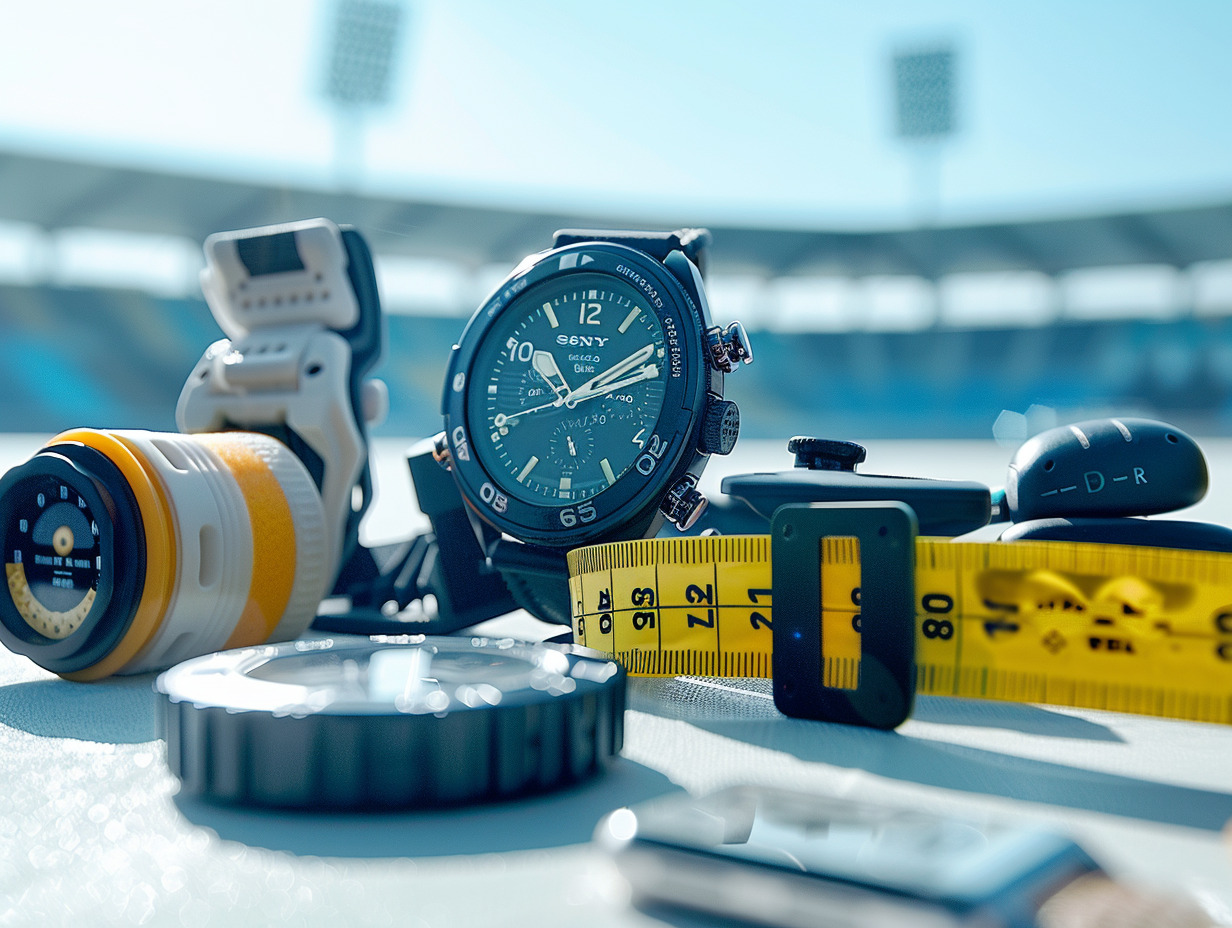
Practical Conversion Guide for Athletes
In the sports arena, mastering conversions between different units of measurement is fundamental for athletes, coaches, and analysts. Athletes who often find themselves between two measurement cultures—the metric system and the imperial system—must indeed juggle between meters and yards. The conversion table is an indispensable tool in this regard, allowing for quick and reliable transformation of values.
Consider the yard, this traditional unit of length in Anglo-Saxon countries, equivalent to 0.9144 meters. For athletes accustomed to the metric system, converting to meters allows for clear understanding and communication of their performances, especially during international competitions where the meter, a unit of the International System of Units, prevails.
In practice, a well-designed conversion table offers a simple method for switching from yards to meters and vice versa. For example, to convert a distance of 100 yards to meters, simply multiply 100 by 0.9144 to get 91.44. This is particularly useful in disciplines like American football, where the measurement of distance covered on the field is often expressed in yards.
Measuring physical quantities such as speed, distance, or weight holds particular significance in sports, where the precision of data can influence training and competition strategies. A practical conversion guide thus serves not only to translate numbers but also to provide a solid foundation for evaluating and improving sports performances. The conversion of units should therefore be viewed not as a constraint, but rather as a necessary step towards rigor and excellence.