
Easy recipes for the whole family, the phrase appears on all culinary blogs. The real issue is not to compile a list of dishes, but to understand which recipe formats best meet two simultaneous constraints: a short preparation time during the week and broad acceptance by both children and adults. It is this intersection that determines the recipes that are truly useful on a daily basis.
Preparation time and versatility: comparison by type of family dish
Not all family dishes are created equal when we consider the time spent in the kitchen and the ability to recycle leftovers. The table below contrasts the most common formats along these two axes.
| Type of dish | Average active time | Use of leftovers | Children’s acceptance |
|---|---|---|---|
| Gratin (pasta, potatoes, vegetables) | 15-20 min | Excellent | Very high |
| Quiche or savory tart | 15-25 min | Good | High |
| Stir-fry or wok | 10-15 min | Average | Variable |
| Soup or velouté | 10-15 min | Excellent | Average |
| Stew (casserole) | 15-20 min + long cooking | Good | High |
The gratin and savory tart dominate this comparison. Their structure (base + filling + cheese or cream) can absorb practically any leftover vegetable, roast chicken, or cheese nearing its expiration. The stir-fry, being quicker, loses versatility because it requires ingredients that can withstand high heat cooking.
To explore more combinations and find variations suited to your pantry, you can visit the site lacuillereauxmilledelices.com which lists a wide range of recipes categorized by ingredient.
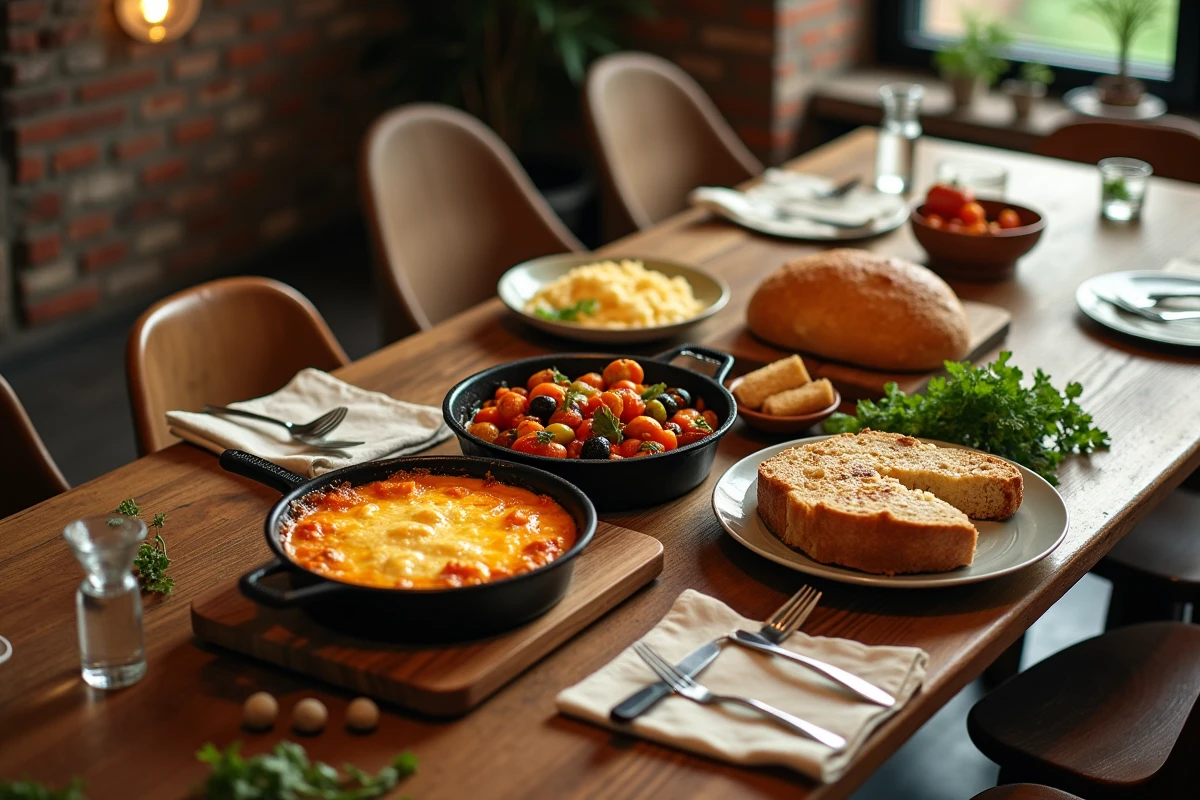
Anti-waste recipes: gratin and quiche as pivot formats
ADEME has noted since 2023 a significant increase in leftover cooking practices in French households, particularly among families with children. This trend is changing the way an evening recipe is chosen: no longer starting from a craving, but from what is lying around in the refrigerator.
Cheese and vegetable pasta gratin for the end of the week
A leftover of cooked shell pasta or penne from the day before, a slightly soft zucchini, a leftover of cream, and grated cheese. The gratin transforms disparate leftovers into a complete dish without requiring any particular technique. The only rule: pre-cook the vegetables that release water (zucchini, spinach) to avoid a soggy gratin.
Baking does the work for about twenty minutes, freeing up time for the rest of the evening. The result pleases children thanks to the golden cheese crust, and adults appreciate that the filling can easily be made more complex (adding sage, nutmeg, or blue cheese).
Savory tart with leeks or tomatoes and cheese
The savory tart works on the same absorption principle, but with an added advantage: the shortcrust pastry can be made in five minutes with three ingredients (flour, butter, water). No need for store-bought puff pastry.
A simple mixture (beaten eggs with cream) binds any combination of vegetables and cheese. Leeks and goat cheese, tomatoes and mozzarella, potatoes and reblochon: each version works with the same preparation time.
Family batch cooking: preparing the week in one session
The Cetelem Observatory, in its study “The French and Everyday Cooking” published in March 2024, highlights a clear increase in meal prep practices among households with children. Sunday batch cooking is no longer a blog trend; it’s a direct response to the mental load of weekday evenings.
Three to five meals prepared in two hours on Sunday are enough to cover most of the week. The principle relies on pooling the basics.
- Cook a large quantity of rice or potatoes that will be used for a gratin on Monday, a mixed salad on Tuesday, and a stir-fry on Wednesday
- Prepare a vegetable broth usable for soup on Thursday evening and as a cooking base for risotto on Friday
- Chop and pre-cook vegetables (carrots, zucchini, leeks) stored in portions in the refrigerator, ready to be added to a quiche or pasta dish
The time savings do not come from the recipe itself, but from eliminating the daily step of “deciding what to eat and then getting the ingredients out.” The food decision made just once a week reduces decision fatigue much more than any food processor.

Roast chicken recipes and stews: maximizing a single ingredient across multiple meals
A whole roast chicken on Sunday generates at least three distinct meals. The thighs and breasts are served on the same day. The leftover shredded meat fills a salad the next day or a pasta gratin the day after. The carcass produces a broth that will become a soup or the base for a risotto.
One roast chicken covers three family dinners without perceived monotony, because the format changes with each serving. This principle also applies to a pork roast or a large pot of vegetables.
Vegetable and legume casserole for busy evenings
Stews have a short active time (peeling and placing in the pot) followed by long passive cooking. A lentil, carrot, and potato casserole started when coming home from work cooks by itself while the children do their homework.
Legumes (lentils, chickpeas) provide plant-based protein and a very low cost per serving. The PNNS recommends increasing their presence in the diet, and the family casserole remains the simplest format to integrate them without resistance from the youngest, especially when adding a tomato sauce or a bit of cream.
- Green lentils with carrots, onions, and a splash of cream: ready in under thirty minutes without soaking
- Oven-roasted chickpeas with sweet potato and mild spices: crunchy texture that appeals to children
- White beans in tomato sauce with sausages: an express version of cassoulet, filling and economical
The family evening meal that really works relies less on the spectacular recipe than on the adaptable format. Gratin, tart, casserole, or chicken varied over several days: dishes that absorb leftovers and are quick to prepare are the ones that last. The most reliable selection criterion remains the simple question: does this dish accept what is left in my refrigerator tonight?