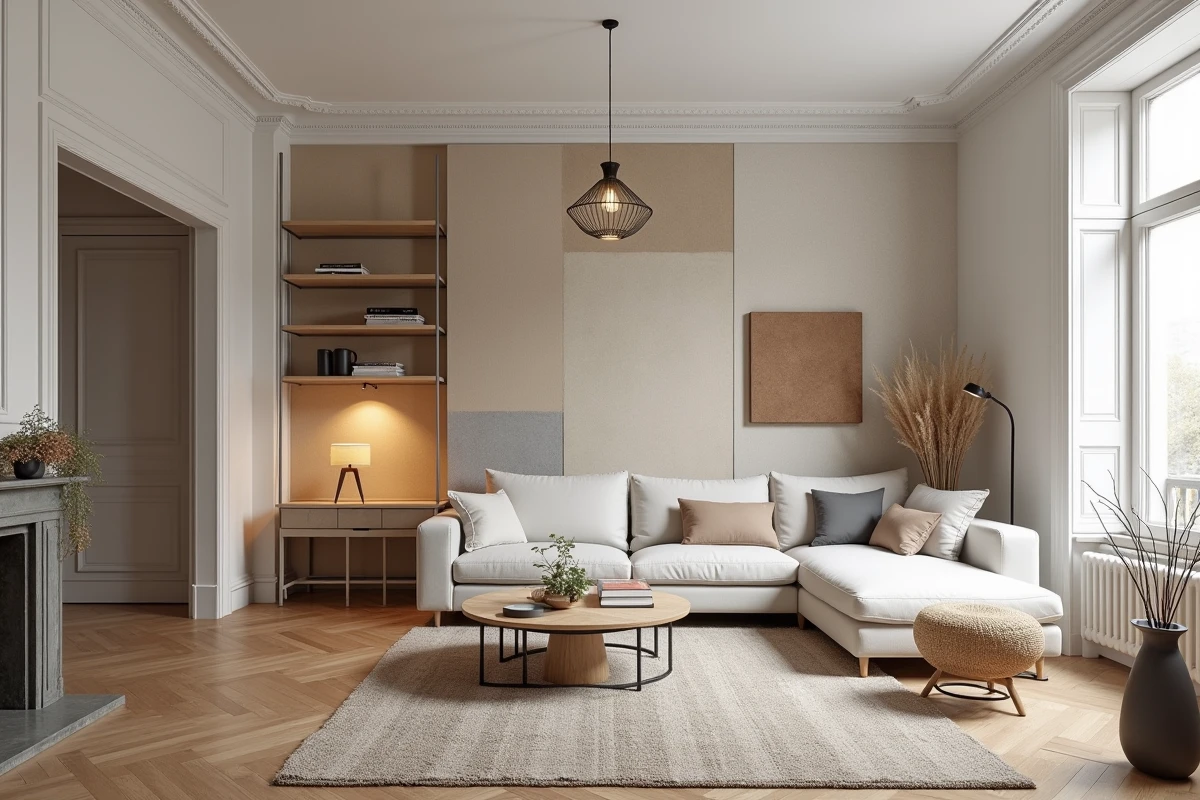
The trendy decoration of an interior relies on concrete choices of materials, colors, and furniture arrangement. Enhancing a room does not necessarily require major renovations, but rather targeted interventions that change the perception of a space. Here are ten original ideas to transform your interior, each focused on a specific technique or element.
1. Wood Slat Wall Panels to Structure a Wall
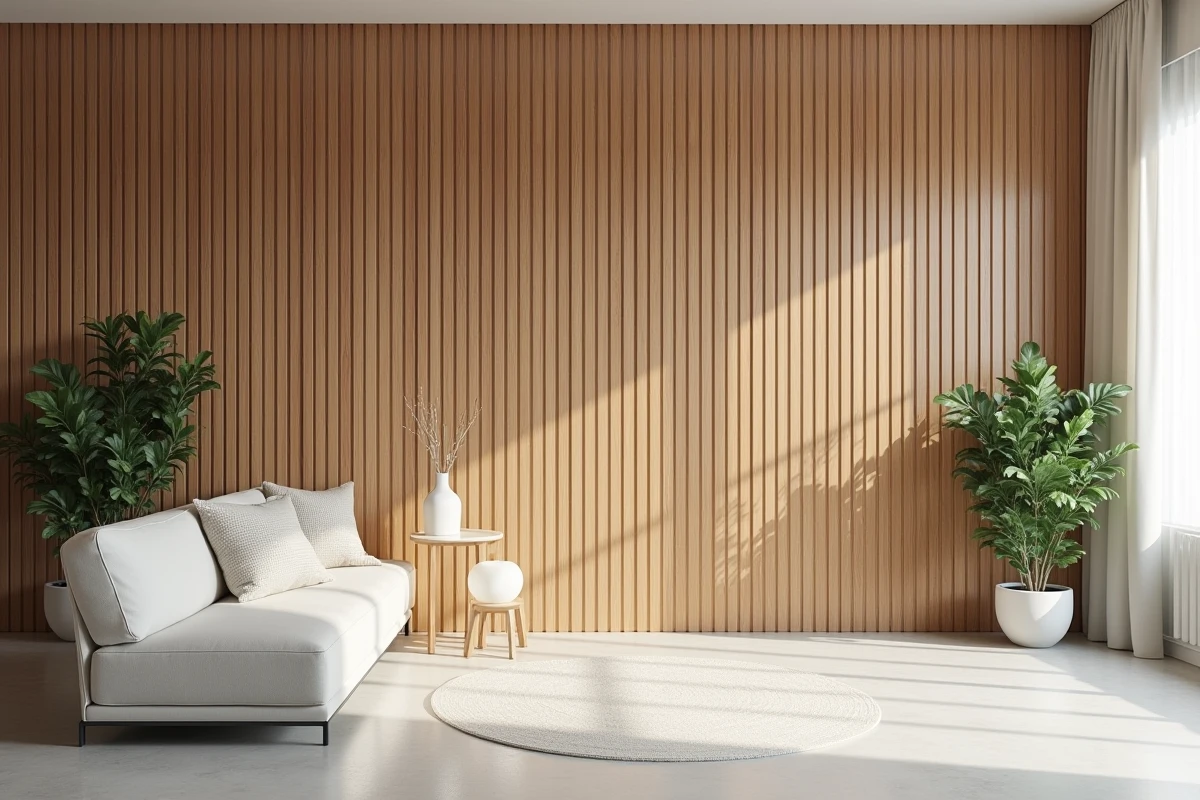
Vertically fixed wood slats on a wall create a relief and depth effect without reducing floor space. This technique works particularly well behind a sofa or a headboard, where the wall becomes a full-fledged decorative element.
Opt for light woods (raw oak, untreated pine) to maintain the brightness of the room. The spacing between the slats alters perception: closely spaced slats create a cocooning effect, while spaced slats visually lighten the wall.
By browsing the decor ideas at Deco Asaiss, you will find wood and wall color combinations that facilitate this type of staging.
2. Color-Block Painting to Define Areas Without Partitions
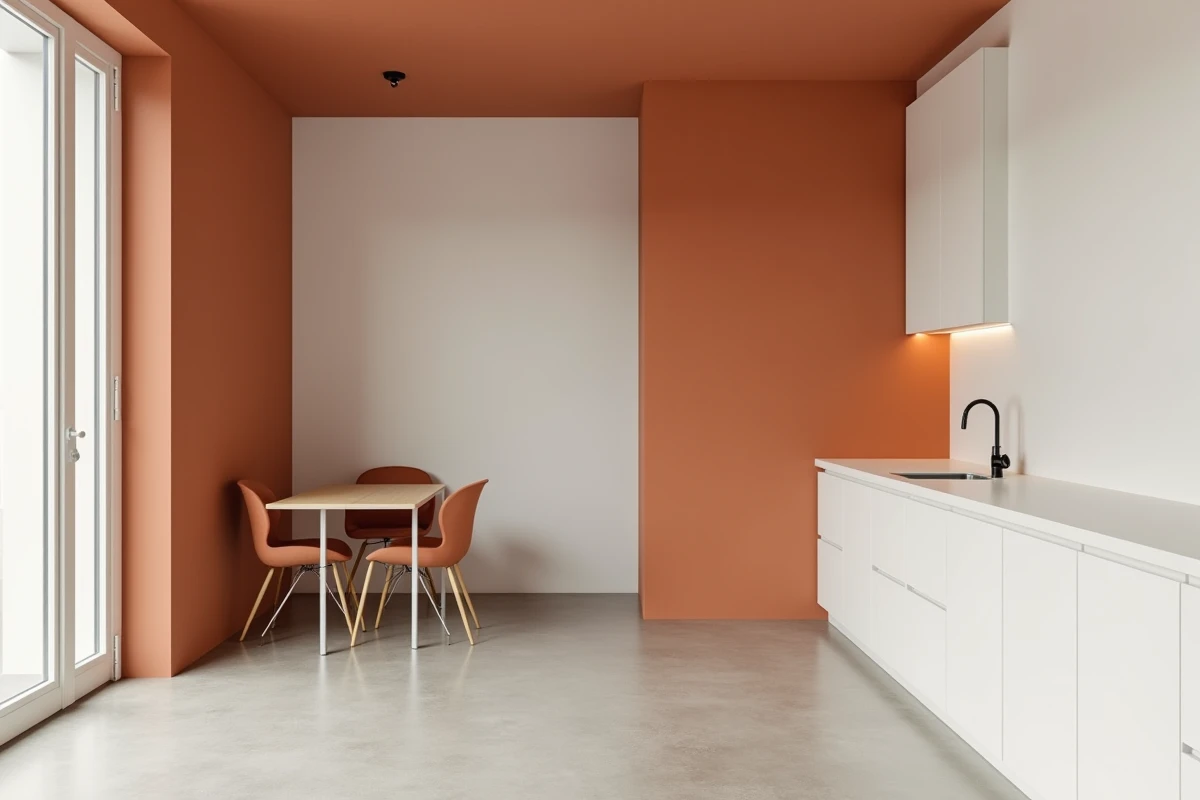
Color-blocking involves painting solid patches of bold color on a section of wall, from the floor up to a defined height, or in an arc. This approach replaces partitions in small spaces by creating distinct visual zones (office corner, dining area, reading nook).
Terracotta, sage green, or deep blue are among the most commonly used colors for this type of treatment. The technical tip: use high-quality masking tape and work in two thin layers to achieve a clean line.
3. Sculptural Lighting as a Focal Point in the Living Room
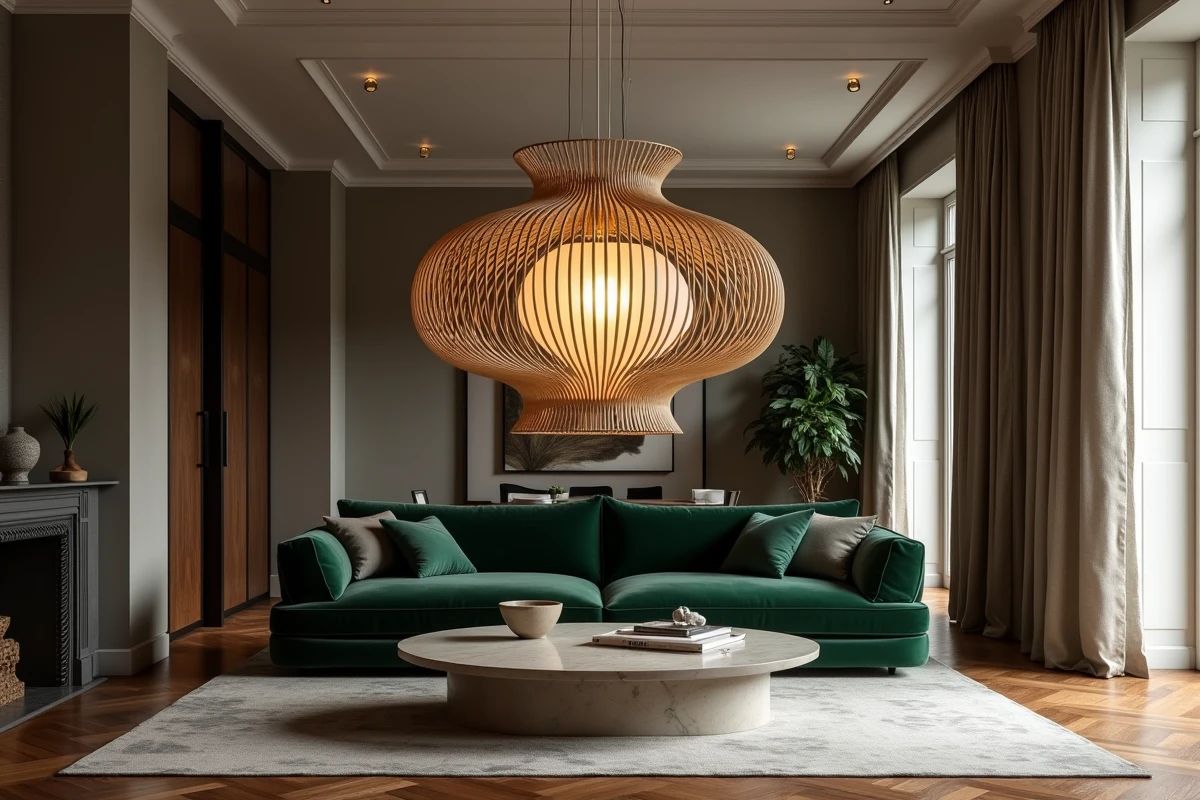
An oversized or organically shaped light fixture changes the ambiance of a living room more radically than a piece of furniture. Woven fiber pendants, articulated black metal floor lamps, ceramic wall sconces: the light fixture becomes a decorative object as well as a source of light.
Place the main pendant slightly off-center from the geometric center of the room to break symmetry. This offset, inspired by Japanese design, creates a visual tension that makes the space feel more alive.
4. Recycled Stoneware and Circular Tiles for Kitchen Flooring
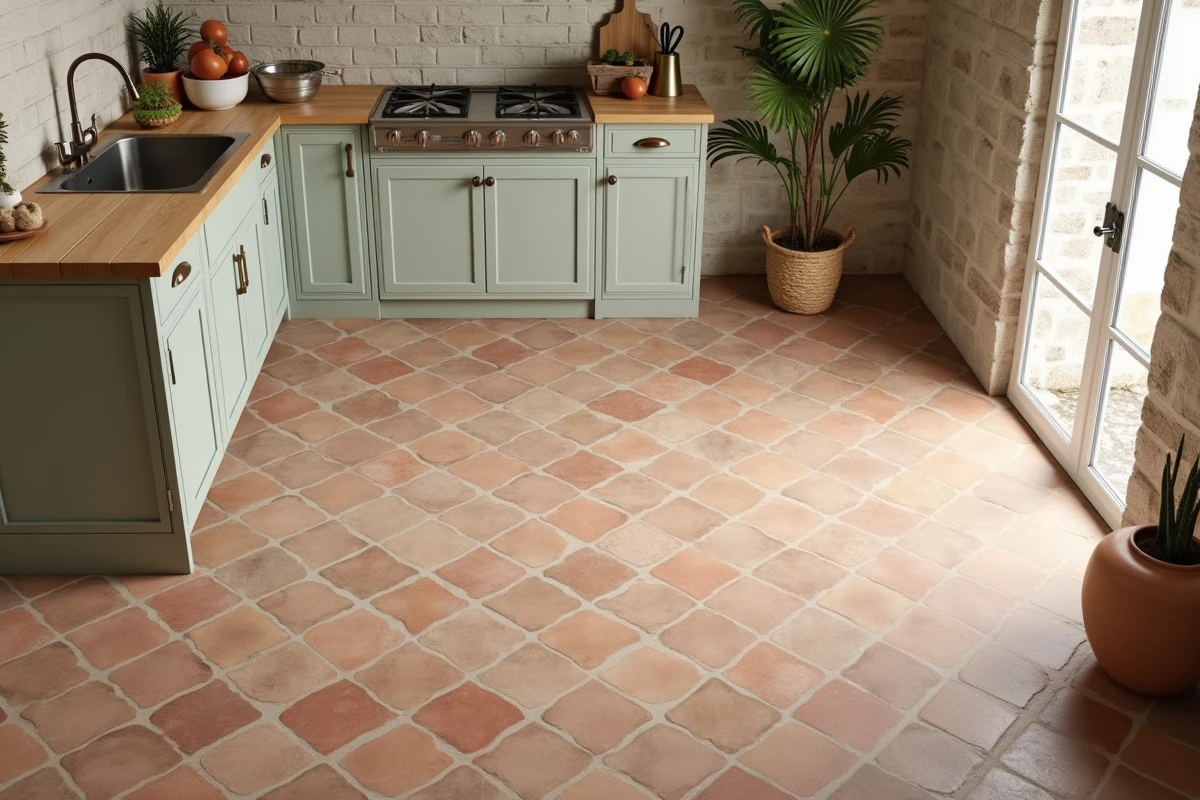
Tiles made from recycled stoneware are gaining ground among mainstream manufacturers. According to the January 2025 Maison&Objet Trends report (Sustainable pathway), circular materials (reconstituted wood panels from offcuts, recycled stoneware tiles) are no longer reserved for niche creators.
In the kitchen, these tiles provide an irregular grain that breaks away from the smooth look of classic industrial tiles. Their shade varies slightly from piece to piece, creating a lively floor without resorting to printed patterns.
5. Asymmetrical Frame Wall in the Bedroom
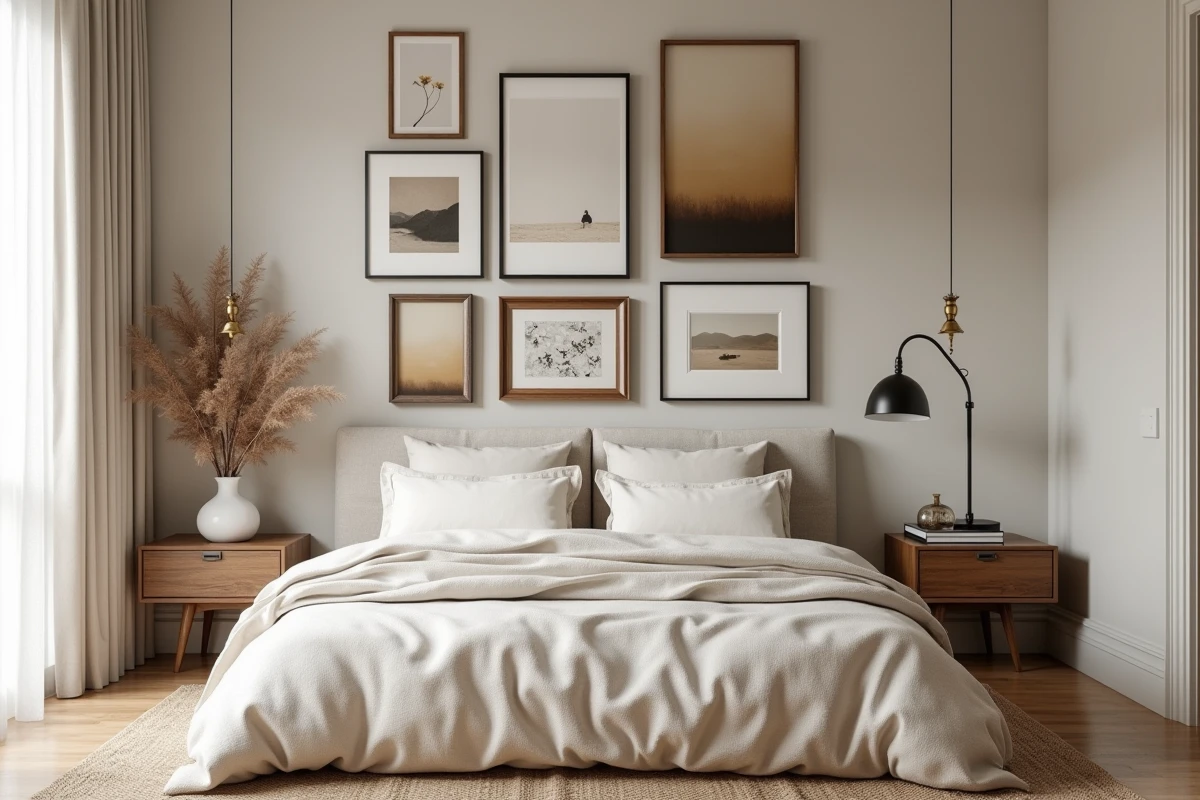
The gallery wall is not limited to a regular alignment. An asymmetrical frame wall, where formats, thicknesses, and subjects vary, gives the bedroom a strong identity.
The most reliable method for achieving the layout:
- Start with the largest frame, positioned slightly above the center of the wall
- Add medium frames around it, maintaining a constant spacing (the width of two fingers)
- Fill in the gaps with smaller formats and objects (mirror, wooden letter, hanging potted plant)
6. Boucle Fabric on Furniture to Warm Up the Living Room
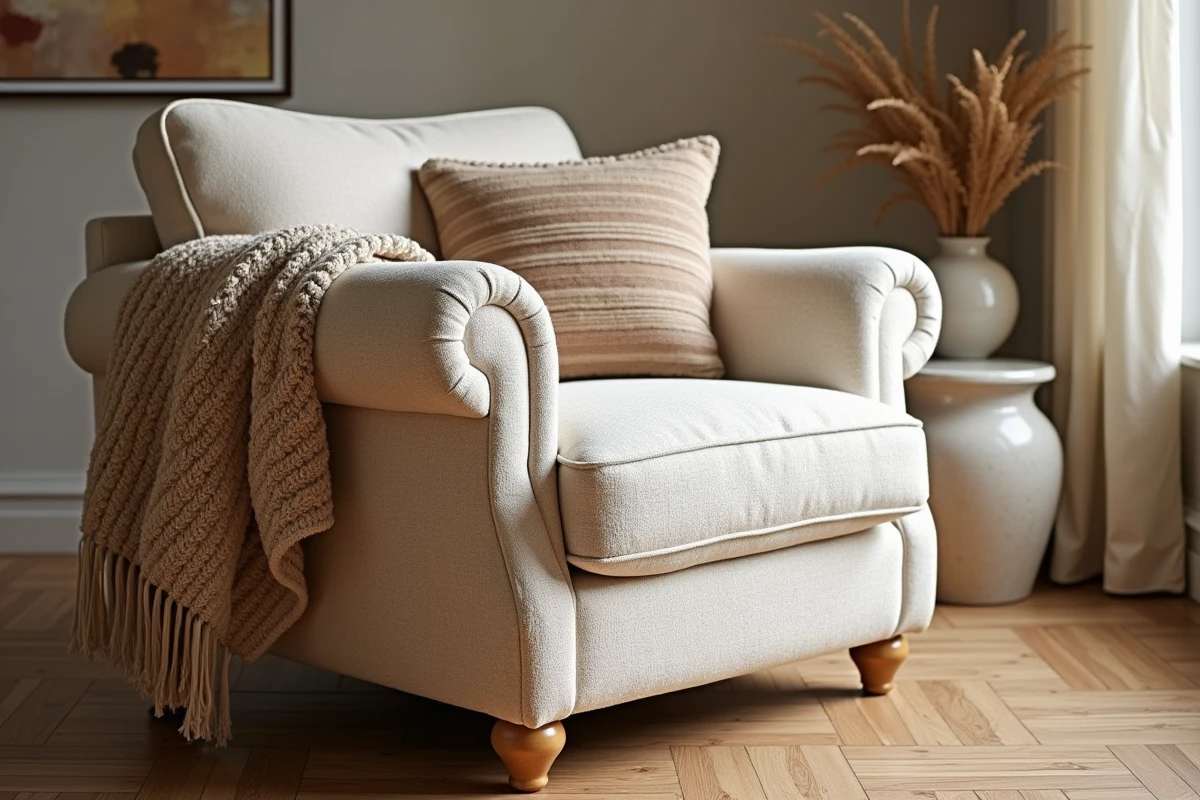
Boucle fabric, with its thick and irregular texture, transforms a basic armchair into a centerpiece. This textile absorbs light instead of reflecting it, softening the ambiance of a living room with contemporary lines.
Beyond the armchair, consider boucle cushions and thick throws placed on a leather or linen sofa. The contrast between a smooth material and a textured material is the main spring of this decor idea.
7. Wooden Lattice to Separate the Entrance from the Living Room
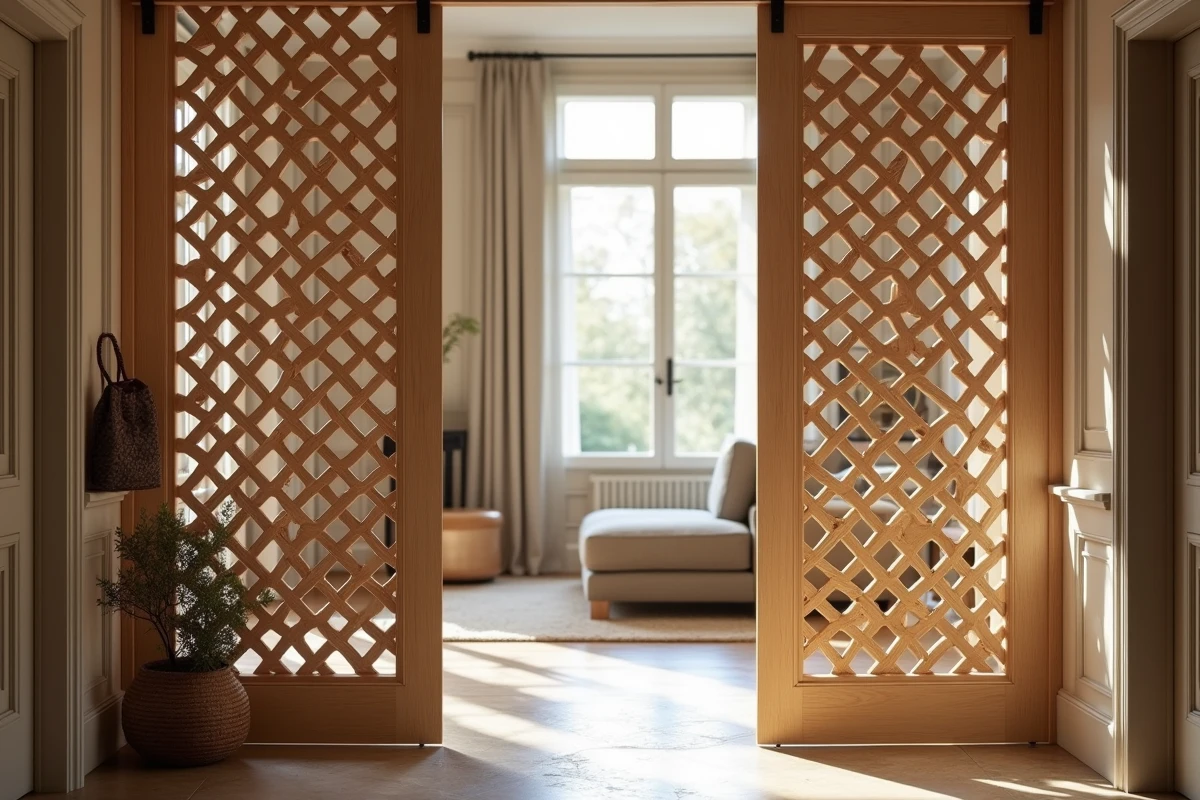
The lattice acts as a partition without blocking light or air circulation. Made of natural wood, it brings warmth to the entrance while preserving the visual openness to the living room.
The most effective models combine vertical and horizontal slats to filter the view without creating a barrier effect. In a small apartment, a partial-height lattice (waist-high) is sufficient to mark the transition between spaces.
8. Handmade Zellige Backsplash in the Kitchen
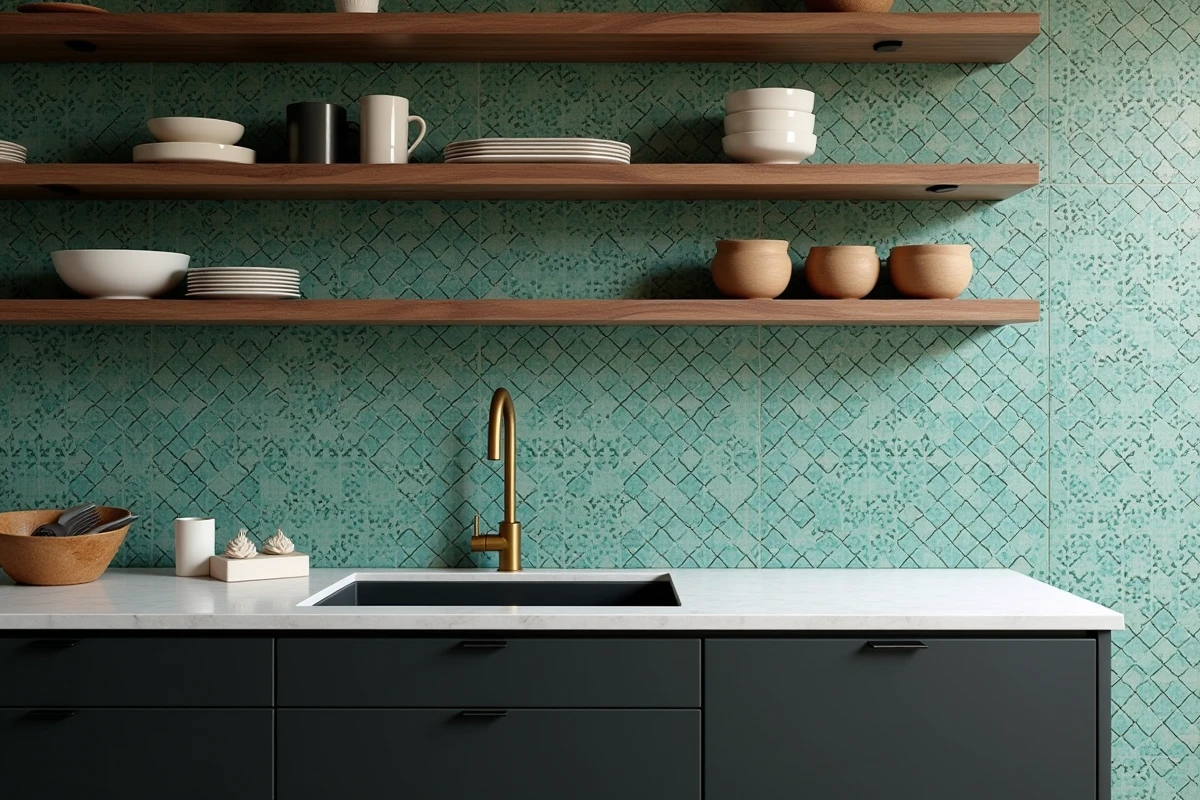
Handmade zellige, with its slight surface imperfections and color variations, gives the kitchen a character that industrial tiles cannot replicate. Each tile has a slightly different thickness and glaze, creating a lively mosaic effect once installed.
Green tones (celadon, olive) and off-whites are the most sought-after for backsplashes. A fine joint installation accentuates the effect of a continuous surface.
9. Open Black Metal Shelves to Display Dishware
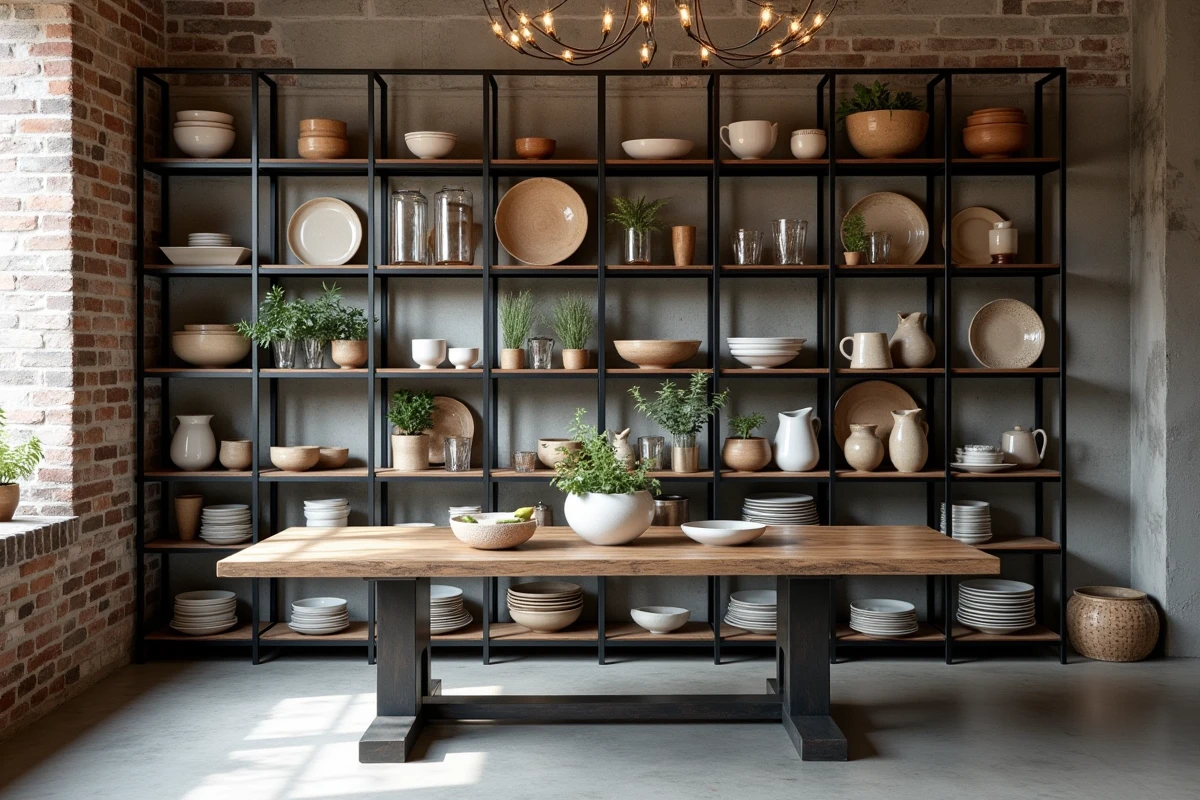
Replacing a closed upper cabinet with open black metal shelves visually lightens the room and transforms dishware into a decorative element. This approach works in both the kitchen and the living room.
The visible organization imposes discipline: limit the exposed items, alternate stacks of plates, jars, and one or two green plants. The open shelf works when it remains half empty, not when it overflows.
10. Low VOC Paint for Sustainable Interior Decoration
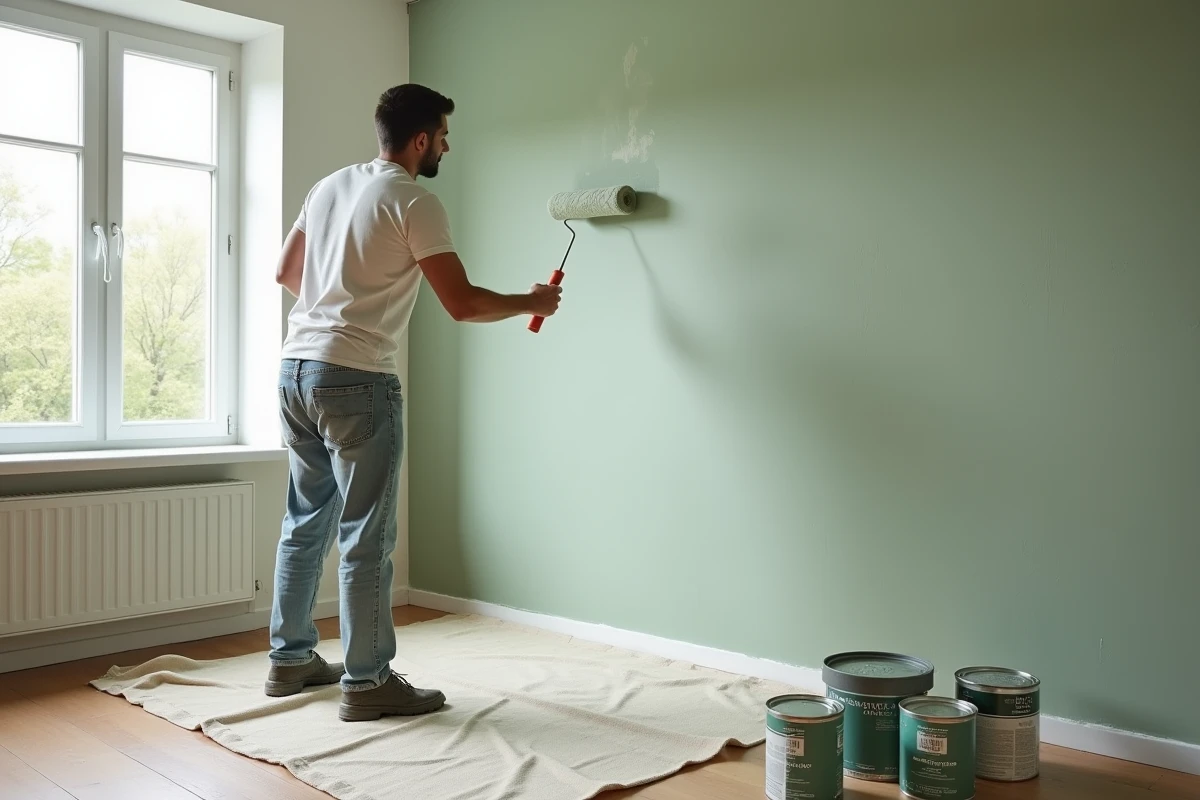
Recent regulations, including RE2020 in France and the European Sustainable Products Initiative strategy, are pushing paint manufacturers to reduce volatile organic compounds (VOCs) emissions. The Order of Architects of Île-de-France notes in its 2024 barometer an increasing consideration of the life cycle of materials even in finishes and decoration.
Specifically, low VOC paint dries with no noticeable odor and does not degrade indoor air quality after application. Current ranges cover the entire palette of trendy colors, from terracotta to olive green.
- Check for the A+ label on the can, which guarantees the lowest emission level
- Prefer water-based paints over solvent-based ones for living spaces
- Apply in two thin layers with proper ventilation, even for low-emission formulations
Each of these ten suggestions acts on a different lever: texture, color, light, material, or spatial arrangement. The common point remains the precision of the gesture. A single wall treated with care, a well-chosen light fixture, or an authentic material is enough to shift the ambiance of a room without engaging in heavy renovation.