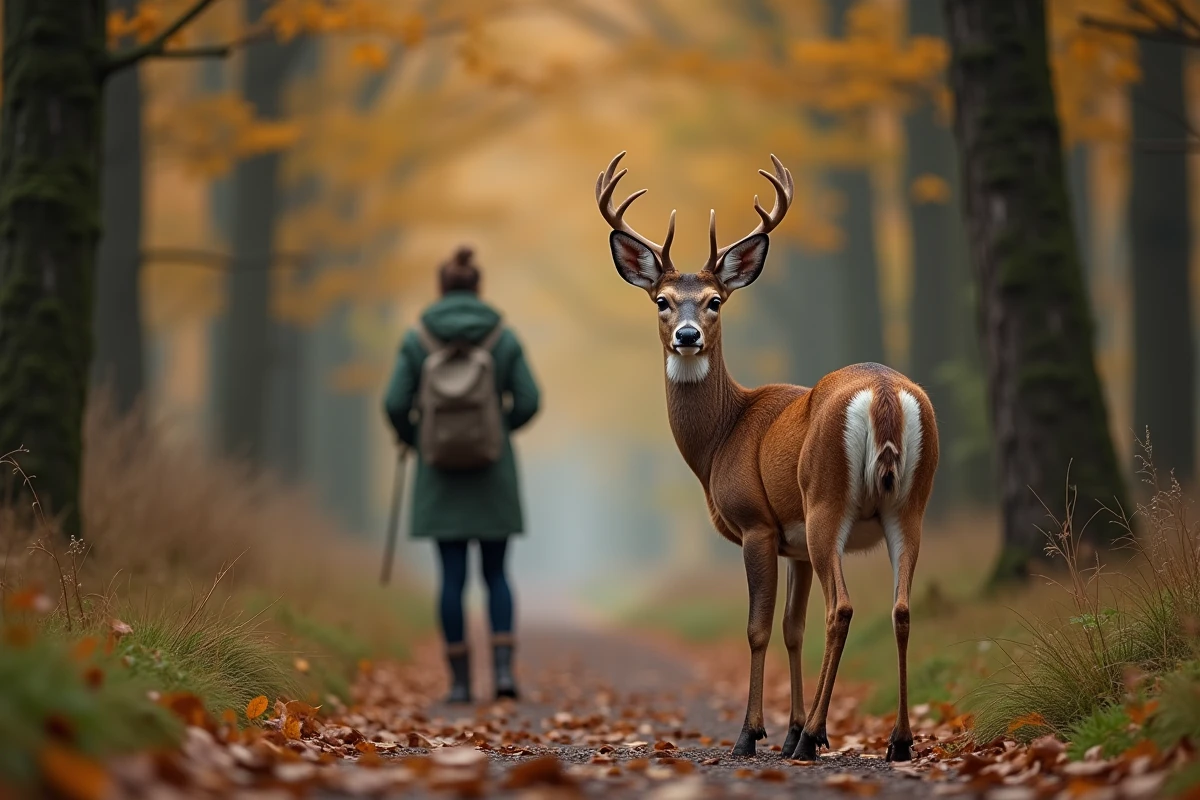
The doe is a female deer whose presence in symbolic traditions dates back several millennia. In Europe, Asia, and among Indigenous peoples of America, this animal has been associated with specific qualities: vigilance, maternal bond, ability to move silently in a hostile environment.
When a doe appears on a path or by the roadside, the spiritual dimension attributed to this appearance is based on a set of converging interpretations, far from just the realm of gentleness.
The spiritual meaning of encountering a doe varies according to different interpretive frameworks, but several traditions share a common foundation: this animal embodies a form of silent attention to the world, a fine perception of what escapes the hurried gaze.
Totem animal doe: what this notion encompasses
The concept of totem animal comes from Native American shamanic practices, which have been adopted and adapted in contemporary neo-spiritual movements. Assigning the doe as a totem means that the qualities associated with this animal (heightened sensitivity, protective instinct, discretion) are believed to reflect or complement the temperament of the individual concerned.
The doe is distinguished from other totems by the absence of a predatory dimension. While the wolf or eagle symbolize the power of action, the doe represents the ability to perceive before acting. Its ears rotate independently, it detects movement from a great distance, and it flees before danger becomes clear. This interpretation reflects a form of intelligence based on reception rather than initiative.
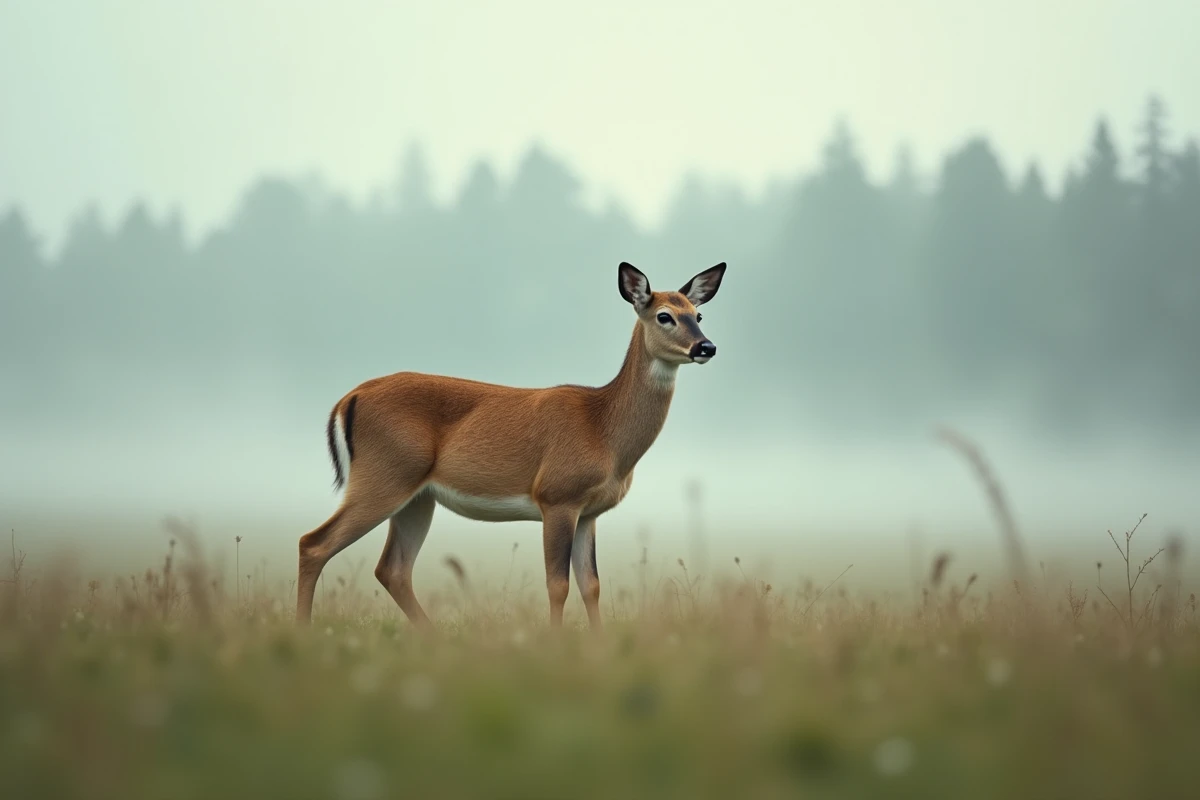
In spiritual approaches, this translates into an invitation to develop inner listening, to pay attention to the subtle signals of a situation (relational, professional, emotional) before making a decision.
Encountering a doe on the road: context modifies the message
Mainstream spiritual articles attribute a singular meaning to the encounter with a doe: slow down, welcome the gentleness. This interpretation remains superficial if it ignores the context in which the encounter occurs.
The location and timing change the symbolic significance. A doe seen in the forest during a leisurely walk does not resonate the same way as a doe standing still by the roadside at night, while the driver is exhausted. The latter situation creates a violent contrast between mechanical speed and animal stillness, between noise and silence.
Recent work in ecopsychology analyzes this type of encounter as a concrete trigger for lifestyle change. Many people describe the appearance of a wild animal on their path as a pivotal moment, after which they altered their relationship with work, daily rhythm, or nature. The spiritual dimension intertwines here with a documented psychological effect: the sudden break in an automatic routine forces the brain to come out of autopilot.
Three parameters that guide interpretation
- The behavior of the animal: a doe that flees immediately is read as a reminder to be cautious, while a doe that remains still and meets the gaze is interpreted as an invitation to introspection.
- The emotional state at the moment of the encounter: stress, grief, transitional period. Spiritual tradition holds that the animal “responds” to an unarticulated inner question.
- Recurrence: encountering a doe once is anecdotal. Seeing it multiple times over a short period is perceived, in symbolic frameworks, as an insistent message related to sensitivity or protection.
Feminine energy and intuition: the doe in spiritual traditions
The doe is consistently associated with feminine energy in Celtic, Native American, and Asian traditions. This association is not limited to the fact that it is the female of the deer. It is based on its biological role: the doe raises her fawn alone, hides it in tall grass during its first weeks, and only joins it to nurse to avoid attracting predators with her scent.
This strategic maternal behavior has fostered a precise spiritual reading: the doe teaches that protecting does not mean being constantly present, but knowing when to step back. In personal development approaches that mobilize animal symbolism, this idea translates into work on letting go and trusting in the autonomy of others.
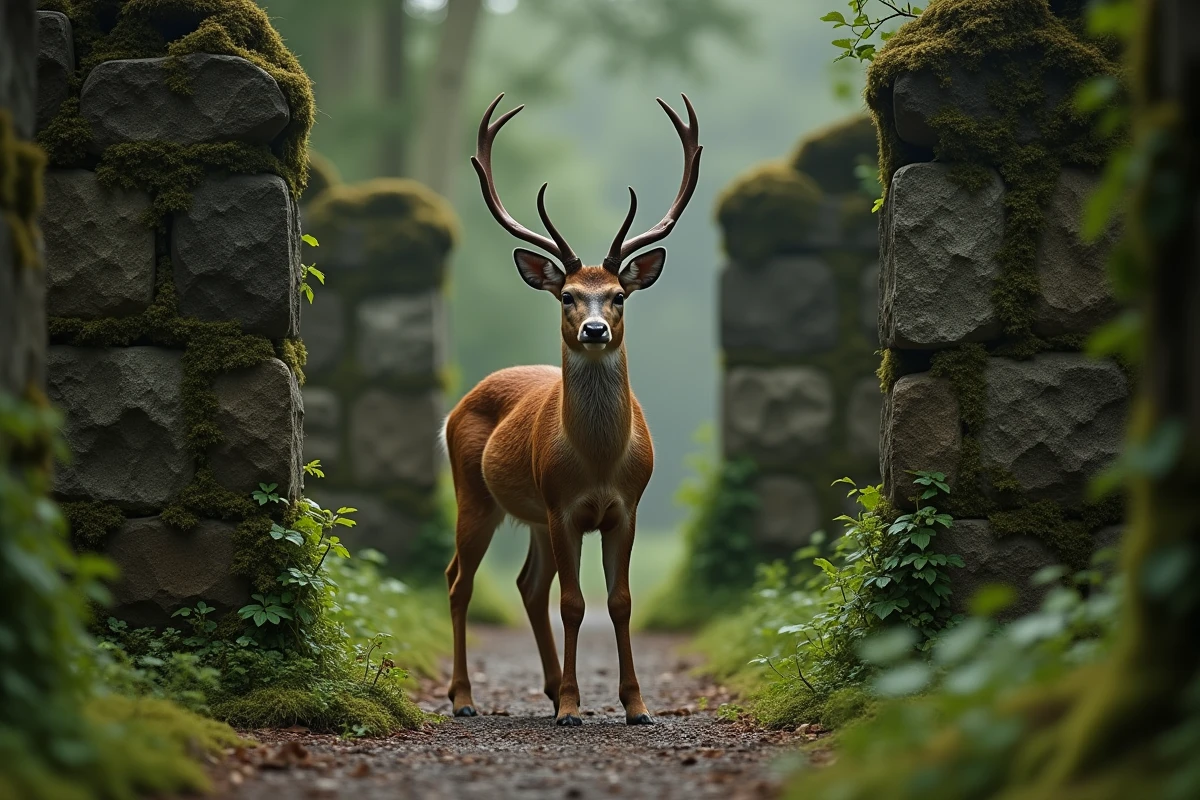
The intuition attributed to the doe stems from its sensory biology. Its sense of smell and hearing allow it to capture information inaccessible to sight. In reflection, spiritual tradition sees this as encouragement to trust subtle perceptions, diffuse impressions that precede logical reasoning.
Doe in dreams: meaning and interpretive framework
The presence of a doe in a dream is interpreted differently depending on whether it appears alone, with a fawn, injured, or fleeing. Symbolic approaches offer a structured interpretive framework:
- Calm and solitary doe: a favorable period for introspection, a need for constructive solitude.
- Doe accompanied by a fawn: an issue of protection surrounding a budding project or a new relationship.
- Injured doe: a warning about repressed sensitivity, an untreated emotional wound that continues to influence decisions.
- Fleeing doe: a signal of an environment perceived as threatening, an invitation to identify the source of stress.
These interpretations are not scientific but serve as a tool for self-analysis used in certain guided meditation and visualization practices. The animal then acts as a projective support, somewhat like a Rorschach test guided by cultural tradition.
Human-deer coexistence: the forgotten dimension
Several European countries have strengthened their management plans for large game between 2022 and 2025 to limit road collisions and agricultural damage. Ecological corridors, wildlife fences, adapted signage: these measures change the very likelihood of encountering a doe on a path or road.
This factual dimension is absent from purely symbolic content. Yet it deserves to be integrated: the encounter with a doe is not just a spiritual sign, it is also the result of a shared territory. The animal does not appear “for” the walker. It occupies a space that human activities have fragmented, and its presence reminds us of the existence of a living world that continues to function on the margins of roads and dwellings.
Seeing a doe on one’s path can be both a moment of grace and an ecological fact. The two interpretations coexist without contradicting each other, and perhaps it is this dual significance that makes the encounter so striking.