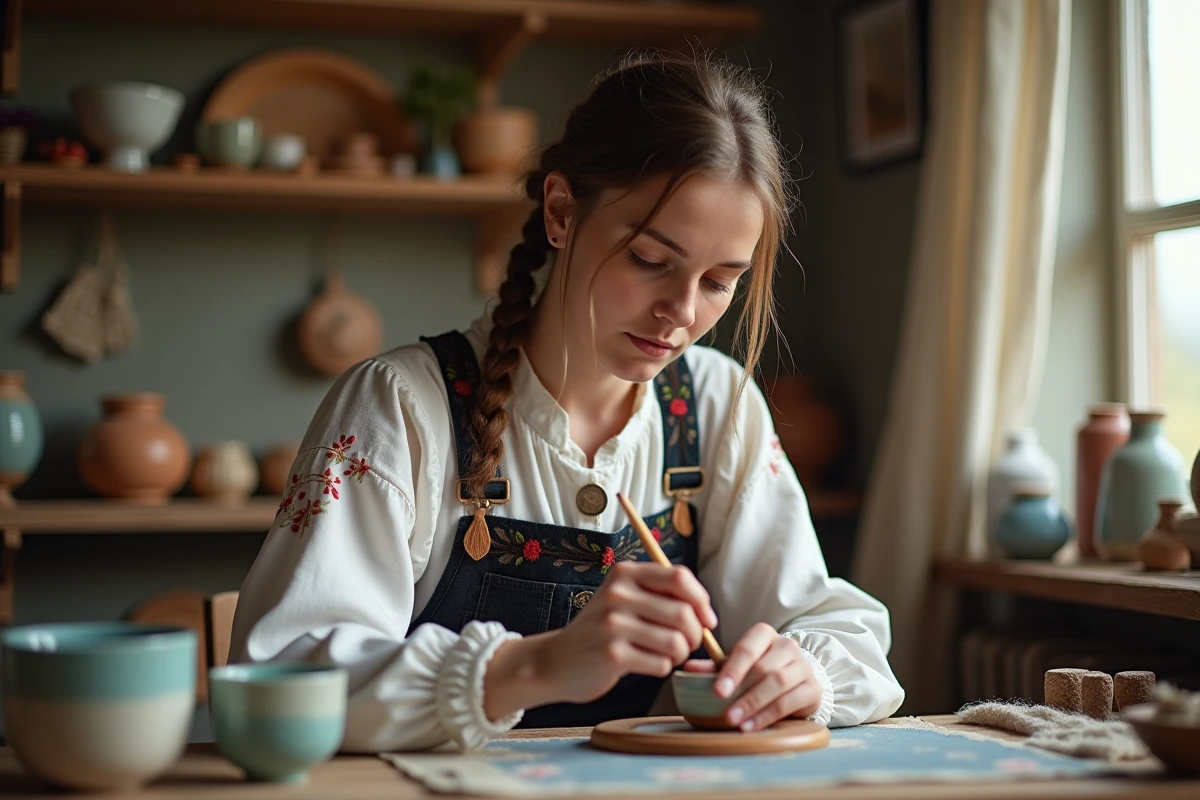
In 2023, more than 18,000 students are receiving bilingual French-Breton education in public and associative schools, six times more than in 1990. Since 2010, the number of traditional crêperies has increased by 15% in major French cities, while Brittany sees the emergence of start-ups in the agri-food and maritime technologies sectors.
The transmission of traditional dances, songs, and sports now takes place as much during festivals as on social media, involving a generation that combines attachment to heritage with digital innovations. Initiatives led by the Breton youth reflect a constant renewal of cultural practices.
Brittany, a territory where traditions forge collective identity
It is impossible to understand Breton daily life without realizing how deeply the Breton culture permeates every corner. In village squares, the fest noz gathers colorful crowds, all generations in harmony. Far from being a relic, this living heritage, praised by UNESCO, is embodied in dances, songs, Breton music, and the camaraderie that flavors popular festivals. The notes of bombarde and biniou are not just a sound backdrop: they tell a story that continues every summer evening, at every gathering.
The Breton language is reclaiming its place on signs, in schools, at the heart of local media, or around the family table. Here, there is no question of sanctifying the past: the new generation is taking ownership of this common good, injecting rap, electro, and street art into it. The Breton cultural heritage circulates, renews itself, and is shared in workshops, meetings, and collaborative projects that unite and stimulate. This is not just a simple preservation; it is a vitality.
The Breton landscapes, from the coast to the Monts d’Arrée, also integrate into this shared narrative. Breton gastronomy, including galettes, cider, and kouign-amann, marks memories as much as palates. This is evident through the actions of Jeune Bretagne: transmission and creation go hand in hand, with each territory asserting its uniqueness while opening up to new ideas. Here, the future is built without turning its back on heritage, but by transforming it into a driving force.
What new faces for Breton culture today?
The Breton culture never sleeps. Young generations are seizing the cultural heritage to take it into new realms, whether artistic, linguistic, or associative. In Rennes, walls come alive with murals featuring Celtic motifs reinterpreted by local artists. Breton music now dialogues with urban rhythms or electronic explorations, pushing the boundaries of the traditional.
In festivals, true laboratories of innovation, sounds collide. Bombarde, biniou, electric guitar, synthesizer: everything mixes to give birth to new collectives, to workshops where everyone finds their place, where practice is shared and transformed.
Here are some examples that illustrate this dynamic:
- The learning of the Breton language continues to gain ground in schools and universities, energized by networks such as the Diwan schools.
- New creative workshops are emerging, led by young collectives that claim a local grounding while remaining in dialogue with contemporary currents.
The influence of artists like Alan Stivell remains palpable, but the current scene confidently asserts its own identity: a plural, inventive, and unrestrained Breton today. The Jeune Bretagne label is one of its symbols, bringing together those who wish to blend artistic creation and heritage. Here, memory nourishes novelty, and Brittany is constantly reinventing itself.
Breton youth: initiatives, creativity, and commitment for tomorrow
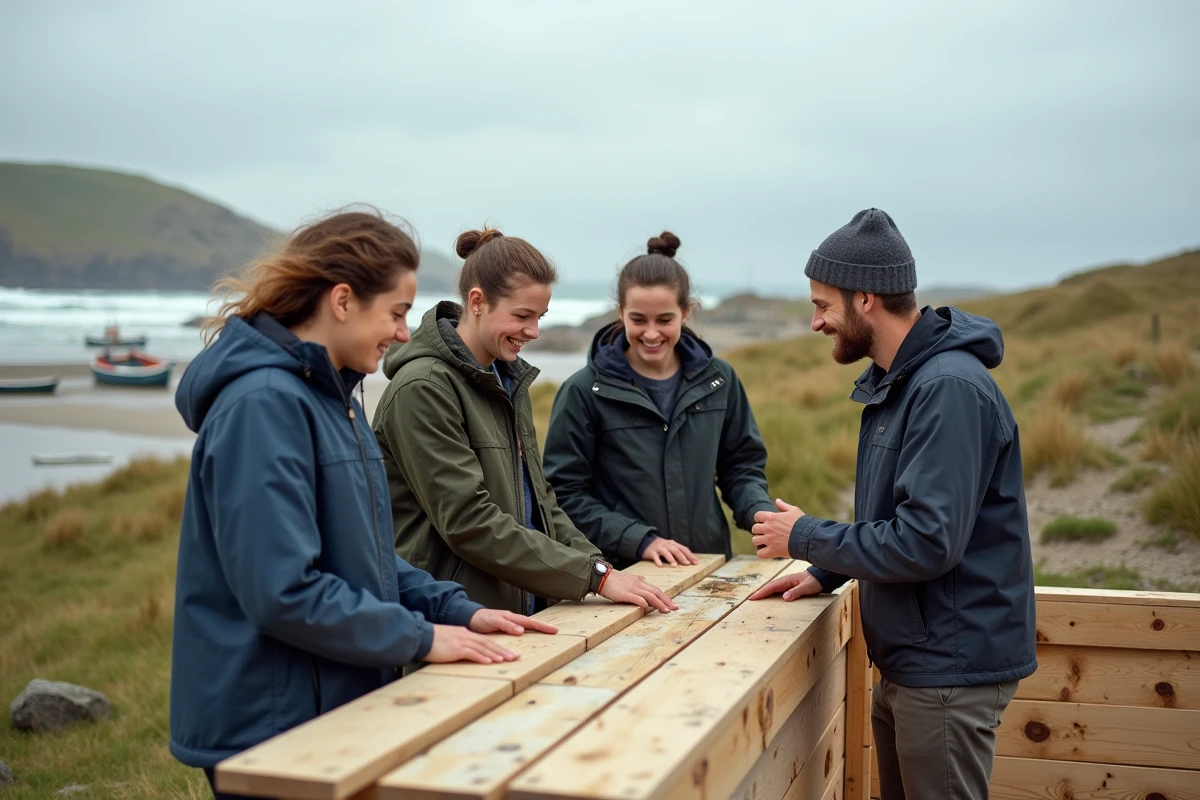
The Breton youth stands out for its ability to take action, combining local initiatives with a collective vision. In every corner of the territory, commitment translates into concrete actions. Groups are forming, both in villages and in neighborhoods of Rennes, determined to marry innovation with heritage preservation.
Environmental protection occupies a significant place. In the face of climate threats, the Breton coast becomes a testing ground: awareness workshops, restoration projects for wetlands, initiatives led by young people to defend their living environment. The actions are based on inherited know-how but willingly open up to new practices. In neighborhoods, groups of young people take charge of rehabilitating coastal paths or restoring old buildings through participatory projects.
This energy also fuels artistic creation. Collective murals, temporary installations, writing workshops: each initiative becomes an opportunity to tell the story of Brittany differently. The youth does not simply preserve memory: they explore it, question it, enrich it, attentive to today’s challenges as well as to the depth of the past.
Some strong themes structure this commitment:
- Development of the circular economy and support for short supply chains
- Highlighting regional languages and intangible heritage
- Creation of new networks of solidarity and mutual aid
In public spaces, this generation occupies a decisive place. Here, the future is woven collectively, at the crossroads of respect for traditions and the desire to experiment. Brittany moves forward, driven by the boldness of its youth, and nothing indicates that this dynamic is about to fade.