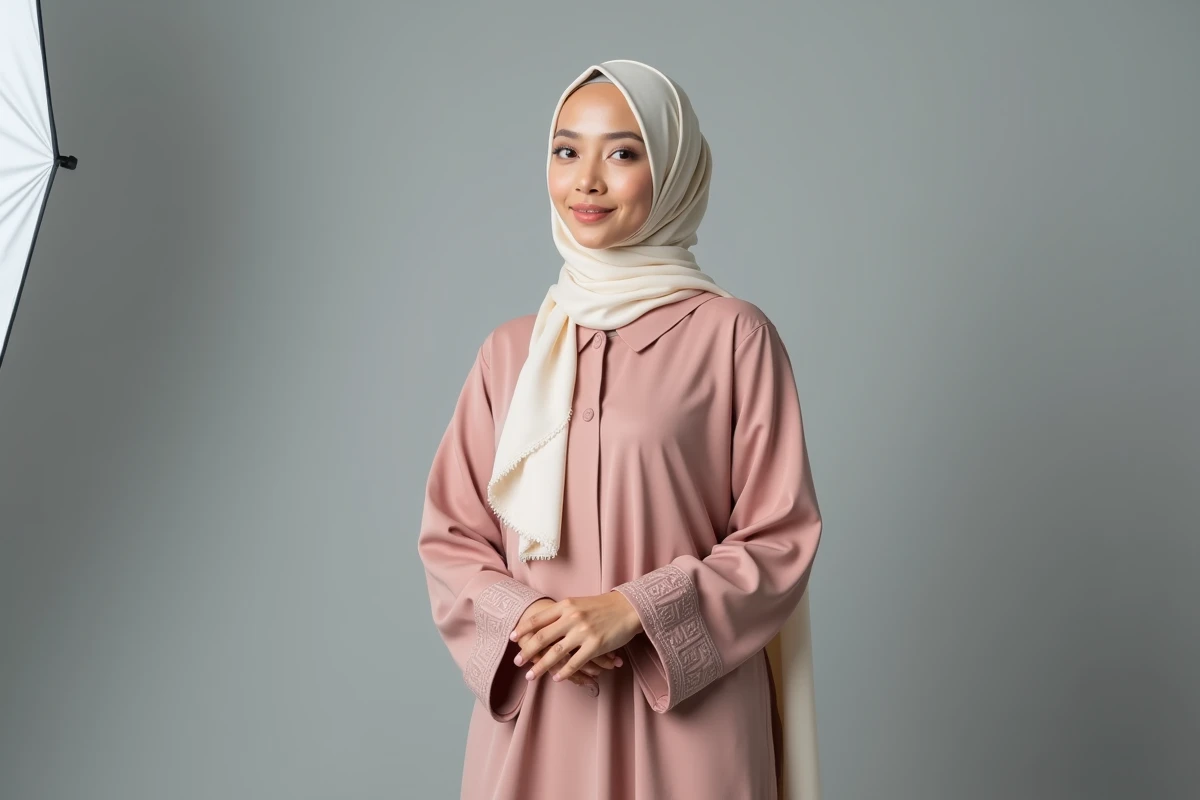
Wearing the hijab on a runway or posing for a modest fashion catalog raises a specific question for practicing Muslim women: does modest modeling respect Islamic principles, or is it still problematic despite the clothing coverage? The answer depends on criteria that typical articles often overlook, including the very nature of the profession of exposure and the context in which the images are disseminated.
Covered body exposure: a legal criterion often ignored
Most online discussions focus on the hijab, gender mixing, or the type of clothing worn. A less addressed angle in French-speaking content concerns what some contemporary jurists call the profession whose essence is the exposure of the body, even when it is covered.
The idea is as follows: a garment can meet the conditions of modesty (looseness, opacity, coverage) while being worn in a setting whose purpose remains to attract attention to the silhouette. According to this interpretation, the problem lies not in the fabric but in the function. The model exists to be looked at, and this purpose raises questions regardless of what she is wearing.
Institutions like Dar al-Ifta al-Misriyyah have addressed this point between 2022 and 2023, distinguishing between modest clothing worn in everyday life and the same clothing worn in a professional exposure context. This distinction changes the game for those who wish to work as modest models thinking that coverage alone is enough to make the profession permissible.
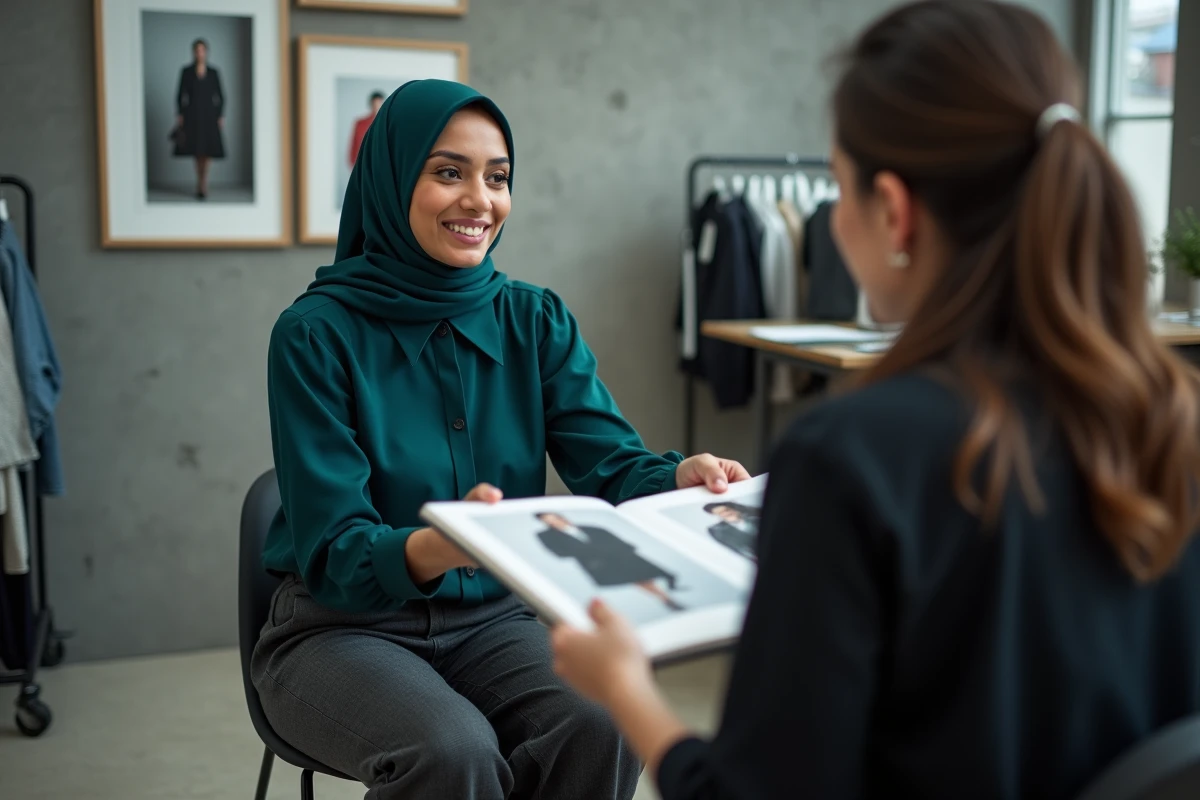
Modest fashion and modeling: two realities not to be confused
Buying an abaya or a hijab online does not pose a legal problem in itself. Manufacturing and selling clothing that meets Islamic modesty criteria is even encouraged by several scholars, as it facilitates the religious practice of Muslim women.
Modeling, however, introduces an additional element: the public staging of a person. And it is precisely here that opinions diverge according to different schools of thought.
The target audience changes the judgment
Several contemporary English-speaking muftis, including Mufti Menk and Shaykh Assim al-Hakeem, have responded between 2021 and 2024 to specific questions about modeling in hijab. Their main distinction rests on the target audience:
- Posing for a catalog intended exclusively for a female audience, without mixed distribution, is considered more tolerable by some opinions, provided that the clothing meets all modesty criteria.
- Disseminating the same images on social media or in magazines accessible to everyone is deemed problematic, as fitna (temptation) does not depend solely on the clothing but also on the gaze of the viewer.
- Modeling that aims for personal notoriety, even with compliant attire, is generally discouraged, as it contradicts the principle of discretion valued in texts.
This framework is not binary halal/haram. It introduces degrees that depend on the actual work context.
Criteria of modesty in Islam applied to modeling
What are the concrete criteria that a modeling career should respect to align with Islamic conformity? Classical texts and contemporary opinions allow for a list of minimum conditions.
- The clothing must not be transparent, tight-fitting, or accentuate the body’s shapes. Loose and opaque fabric is required.
- The photo shoot or runway show must not include suggestive poses, excessive makeup, or staging that draws attention to physical beauty rather than the clothing.
- The dissemination of images should ideally remain limited to a female audience, or at a minimum, not encourage mixed interaction (comments, shares on open platforms).
- The model’s intention matters: working to promote modest clothing differs, in legal appreciation, from work motivated by fame or prestige.
These conditions are rarely all met in the reality of the market. Modest fashion brands, including those founded by Muslim women, disseminate their campaigns on Instagram, TikTok, or YouTube, where public control is impossible.
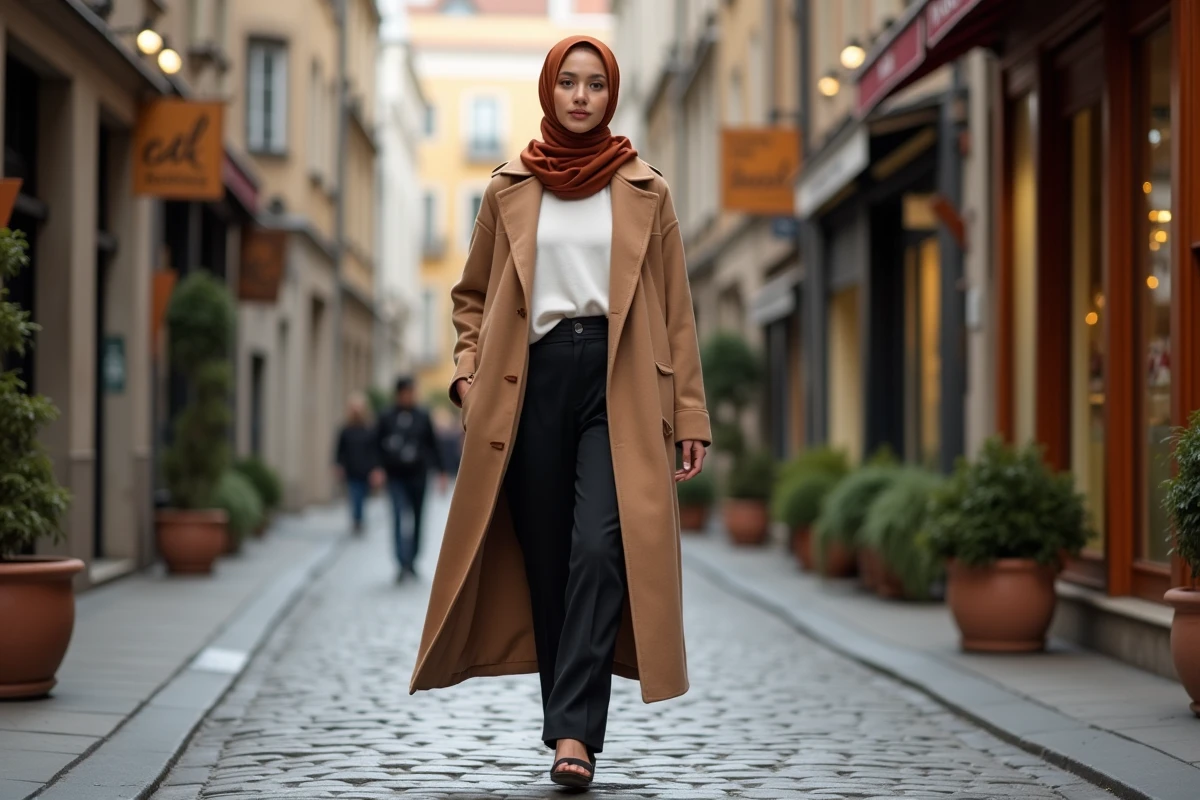
Modest fashion and the global market: a gap with religious practice
The market for modest fashion represents a rapidly growing segment. Major Western brands have launched dedicated lines, and Fashion Weeks now include modest runway shows. This commercial success creates frequent confusion: what is commercially “modest” is not automatically compliant with Islamic criteria.
A stylized turban that reveals the neck, a long but fitted dress, an outfit covered but photographed in a seductive pose: these market realities show that the label “modest” responds to a consumer trend, not to a religious specification.
For a Muslim woman considering this profession, the question is therefore not limited to “is it halal or haram.” It involves examining each contract, each campaign, each dissemination on a case-by-case basis, according to the conditions listed above.
What scholars recommend in practice
The majority of contemporary opinions converge towards a cautious position: favoring careers in fashion that do not involve personal exposure. Styling, textile creation, brand management, or fashion writing are alternatives often cited by muftis consulted on the subject.
For those who still choose modeling, the recurring recommendation is to consult a trusted scholar who knows the concrete details of the proposed contract, rather than relying on a general opinion found online. The Islamic judgment on this profession depends less on a universal rule than on the specific circumstances of each situation.